Best Spine Surgeons in Mumbai: Advanced Spine Care at Synapse Spine
Persistent back pain, neck pain, numbness, weakness, or difficulty walking can significantly affect everyday life. While many spinal conditions improve with appropriate non-surgical treatment, some patients may eventually require specialized evaluation or surgery. Choosing the right specialist is therefore an important part of receiving safe and effective spine care.
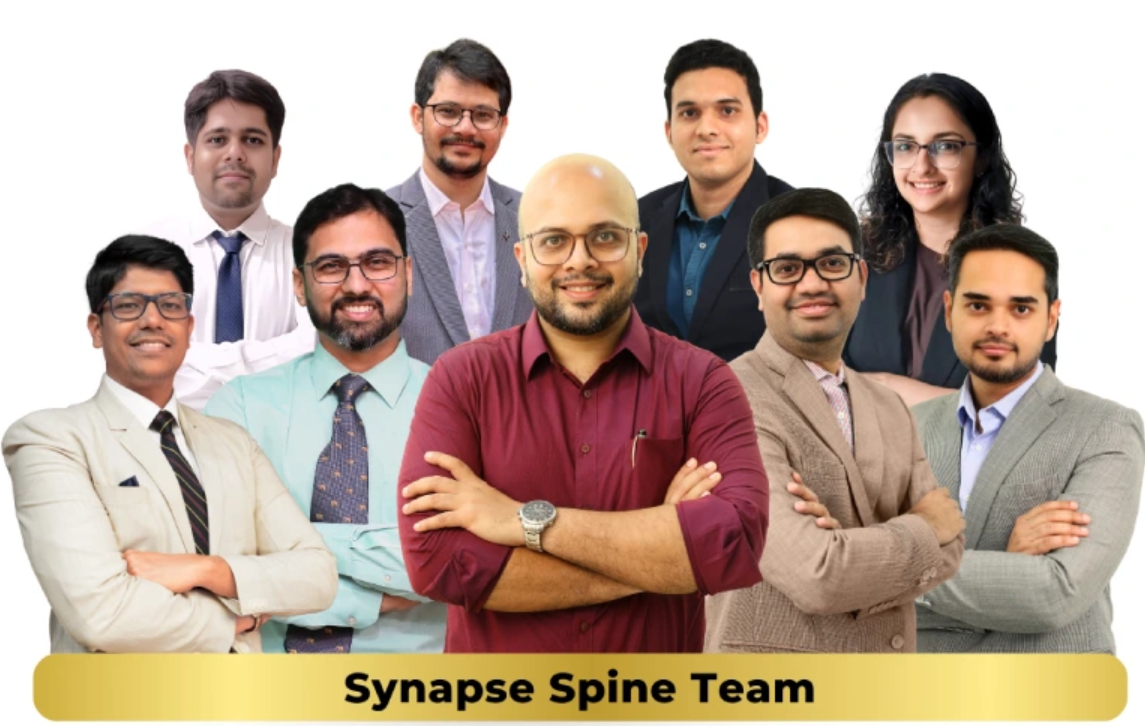
For people searching for Best Spine Surgeons in Mumbai, Synapse Spine brings together a multidisciplinary team of orthopaedic spine surgeons, neurospine surgeons, neurosurgeons, and specialists in minimally invasive spine care. The team focuses on accurate diagnosis, evidence-based treatment, and individualized care for a broad range of spinal disorders.
Understanding Spine Problems
The spine supports the body, protects the spinal cord, and enables movement. Problems affecting the discs, vertebrae, nerves, spinal cord, or supporting structures can cause pain and neurological symptoms.
Common conditions managed by spine specialists include:
- Slipped or herniated discs
- Sciatica
- Low back pain
- Neck pain
- Spondylosis
- Spinal stenosis
- Spondylolisthesis
- Radiculopathy
- Degenerative disc disease
- Cervical myelopathy
- Spinal cord injuries
- Spinal tumors
- Spine infections
- Paralysis and paraplegia
Synapse Spine’s treatment portfolio includes both non-surgical and surgical approaches, allowing treatment to be matched to the underlying condition rather than assuming surgery is always necessary.
Meet the Spine Specialists at Synapse Spine
Synapse Spine’s team includes specialists from both orthopaedic and neurosurgical backgrounds. According to the organization’s doctors’ profile, its team includes Dr. Nandan Marathe, Dr. Anuj Bhide, Dr. Ajit Mishra, Dr. Aditya Raj, Dr. Abhishek Kulkarni, Dr. Medha Vyas, Dr. Kunal S. Singh, Dr. Sushant Nadkarni, and Dr. Falgun Yadav Dhawale.
This multidisciplinary structure can be particularly useful because different spinal conditions may require different areas of expertise.
Dr. Nandan Marathe
Dr. Nandan Marathe is an Orthopaedic Spine Surgeon. Synapse Spine states that he has pursued structured spine fellowship training at the University of Toronto and visiting fellowships in Korea, the USA, and Italy. His listed fellowships include complex spine surgery and deformity, spinal tumors, and minimally invasive spine surgery. The website also states that he has published more than 140 original articles in national and international peer-reviewed journals.
Dr. Anuj Bhide
Dr. Anuj Bhide is listed as a Brain & Spine Surgeon and provides spine care in areas including Andheri and Vile Parle. His profile emphasizes individualized treatment for patients with back problems and consideration of conservative as well as surgical options where appropriate.
Dr. Ajit Mishra
Dr. Ajit Mishra is a Neurospine Surgeon with expertise in complex spinal conditions. Synapse Spine particularly highlights his experience with spinal tumors and his approach of thoroughly evaluating spinal problems before recommending treatment.
Dr. Aditya Raj
Dr. Aditya Raj is an Orthopaedic Spine Surgeon with specialized training in complex spine surgery, minimally invasive spine surgery, spine endoscopy, and spinal deformities. His listed fellowships include training through AO Spine North America/University of Toronto and Korea, along with training in pediatric and adult spine deformities at Samsung Medical Centre in South Korea.
Other Specialists
Synapse Spine also includes Dr. Abhishek Kulkarni, a Consultant Spine Surgeon and Pain Management Specialist; Dr. Medha Vyas, a Neurosurgeon; Dr. Kunal S. Singh, a Consultant Spine Surgeon specializing in minimally invasive approaches; and orthopaedic spine surgeons Dr. Sushant Nadkarni and Dr. Falgun Yadav Dhawale.
Non-Surgical Spine Treatment
Spine surgery is not always the first option. Depending on the diagnosis, symptoms, severity, and response to previous treatment, a specialist may recommend conservative management.
Synapse Spine offers several non-surgical treatment options, including:
- Physiotherapy
- Spinal injections
- Facet blocks
- Root blocks
- Rehabilitation
- Lifestyle and exercise guidance
The organization’s treatment resources also include guidance on avoiding spine surgery when appropriate.
A detailed assessment can help determine whether symptoms can be managed conservatively or whether surgical intervention should be considered.
Advanced Spine Surgery Options
When surgery is medically indicated, the appropriate technique depends on the condition and the patient’s anatomy.
Synapse Spine lists several surgical procedures, including:
Endoscopic Spine Surgery
Endoscopic or keyhole spine surgery uses smaller access points and specialized visualization techniques for selected spinal conditions.
Minimally Invasive Spine Surgery
Minimally invasive procedures aim to limit disruption to surrounding tissues while addressing the underlying spinal problem. Whether a minimally invasive approach is appropriate depends on the diagnosis.
Microdiscectomy and Endoscopic Discectomy
These procedures may be considered for selected disc-related conditions where a herniated disc is compressing a nerve and causing persistent symptoms.
Disc Replacement
Disc replacement surgery may be considered in selected patients with appropriate disc-related conditions. The suitability of this procedure requires detailed evaluation.
Spinal Fusion
Lumbar spinal fusion may be recommended for selected conditions involving instability or structural problems. The exact surgical plan depends on the affected spinal levels and the patient’s condition.
Deformity Correction
Complex spinal deformities, including scoliosis, may require specialized planning and surgery. Synapse Spine has specialists with dedicated training in spinal deformity management.
How Is a Spine Problem Diagnosed?
A spine consultation generally begins with a detailed discussion of symptoms and medical history.
The specialist may assess:
- Location and duration of pain
- Pain radiating into the arms or legs
- Numbness or tingling
- Muscle weakness
- Walking difficulties
- Previous treatments
- Previous injuries or surgeries
- Neurological findings
Depending on the clinical assessment, imaging such as X-rays, MRI or CT scans may be recommended.
The objective is to identify the underlying cause rather than treating pain alone.
Why Personalized Spine Care Matters
Two people can have similar symptoms but completely different underlying conditions. For example, leg pain may be related to a disc problem, spinal stenosis, or another condition affecting a nerve.
For this reason, treatment should be based on diagnosis and individual circumstances.
Synapse Spine describes its approach as combining modern technology, clinical expertise, and patient-centered care, with personalized treatment plans for spinal disorders ranging from common back problems to complex conditions.
Clinic Network and Patient Accessibility
Synapse Spine has a broad network of locations across Mumbai and the surrounding region, including Chembur, Mumbai Central, Bandra, Vile Parle East, Andheri East, Andheri West, Goregaon, Malad, Borivali, Mira Road, Bhayandar, Vasai, and Virar.
This network can make specialist spine consultations more accessible to patients who require assessment, follow-up, rehabilitation, or ongoing management.
Synapse Spine also states that it supports outstation patients with testing and investigations to make their treatment journey more convenient.
Choosing the Right Spine Surgeon
When searching for Best Spine Surgeons in Mumbai, patients should consider more than online rankings or proximity.
Important factors include:
- Specialist qualifications and training
- Experience with the specific spinal condition
- Orthopaedic or neurosurgical expertise where relevant
- Availability of non-surgical treatment options
- Experience with minimally invasive techniques when appropriate
- Access to appropriate diagnostic and surgical facilities
- Clear communication about benefits, risks, and alternatives
- Postoperative and rehabilitation support
The right surgeon is one who evaluates the complete clinical picture and recommends the least invasive effective treatment whenever appropriate.
Why Choose Synapse Spine?
Synapse Spine brings together specialists with different areas of expertise within spine and neurosurgical care. Its doctors have training from leading institutions in India and abroad, with expertise spanning complex spine surgery, deformity correction, minimally invasive surgery, spinal tumors, pain management, and general spinal disorders.
The organization also offers both conservative and surgical treatment pathways. This allows patients to receive an assessment focused on their specific diagnosis rather than being directed toward surgery automatically.
Patients looking for a spine specialist Doctor in Mumbai can approach Synapse Spine for evaluation of back pain, neck pain, sciatica, disc problems, spinal stenosis, deformities, and other spinal conditions.
When Should You Consult a Spine Specialist?
Consider consulting a spine specialist if you have persistent or recurring:
- Back or neck pain
- Pain radiating into an arm or leg
- Numbness or tingling
- Muscle weakness
- Difficulty walking
- Symptoms that do not improve with conservative treatment
- Pain following an injury
- Known spinal deformity
- A diagnosed disc or spinal condition
Urgent medical evaluation is particularly important when spinal symptoms are accompanied by significant weakness, loss of bladder or bowel control, or other sudden neurological changes.
Book a Consultation at Synapse Spine
If ongoing back or neck problems are affecting your mobility, work, sleep, or quality of life, an evaluation by an experienced spine specialist can help determine the underlying cause and appropriate treatment pathway.
Contact Synapse Spine
✉️ synapsespine@gmail.com
Book an appointment with Synapse Spine to discuss your back, neck, disc, nerve, or spinal condition. The specialist team can evaluate your symptoms, review relevant investigations, explain available treatment options, and help you understand whether non-surgical management or surgery may be appropriate.
Frequently Asked Questions
1. When should I see a spine surgeon?
You should consider a spine consultation when back or neck pain persists, repeatedly returns, causes radiating pain or neurological symptoms, or does not improve with appropriate conservative treatment. A specialist can determine whether surgery is actually required.
2. Do all spine conditions require surgery?
No. Many spinal conditions can initially be managed with conservative approaches such as physiotherapy, medication, exercise, or selected injections. Surgery is considered when clinically appropriate based on the diagnosis, severity, symptoms, and response to other treatments. Synapse Spine provides both non-surgical and surgical treatment options.
3. What conditions do Synapse Spine specialists treat?
The team treats a broad range of conditions including sciatica, slipped discs, spondylosis, spinal stenosis, spondylolisthesis, radiculopathy, degenerative disc disease, cervical myelopathy, spinal tumors, spine infections, spinal cord injuries, and spinal deformities.
4. Does Synapse Spine offer minimally invasive spine surgery?
Yes. Synapse Spine lists minimally invasive spine surgery, keyhole/endoscopic procedures, microdiscectomy, endoscopic discectomy, disc replacement, fusion, deformity correction and other specialized procedures among its surgical treatment options.


Comments
Post a Comment