Scoliosis Surgery in Mumbai: Advanced Spine Deformity Care at Synapse Spine
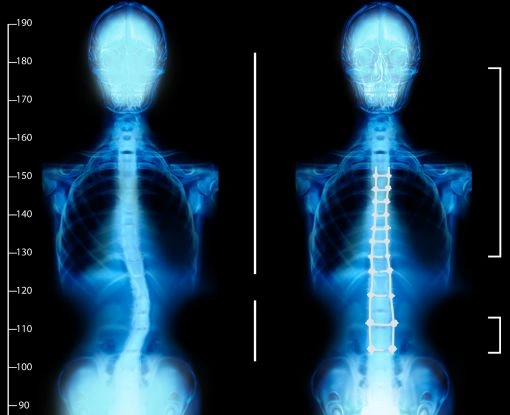
Scoliosis is a condition in which the spine develops an abnormal sideways curvature. While mild scoliosis may not cause significant problems, more pronounced curves can affect posture, balance, mobility, and, in some cases, breathing or other aspects of physical function. Early evaluation by a spine specialist can help determine whether observation, physiotherapy, bracing, or surgery is appropriate.
For patients considering Scoliosis Surgery in Mumbai, Synapse Spine provides specialized evaluation and treatment for spinal deformities through a team of orthopaedic spine surgeons and neurospine specialists. The team focuses on individualized treatment plans based on the patient’s age, symptoms, spinal curvature, progression, and overall health.
What Is Scoliosis?
Scoliosis is a three-dimensional spinal deformity characterized by an abnormal lateral curvature of the spine. Instead of appearing relatively straight when viewed from behind, the spine curves to one side and may also rotate.
Scoliosis can develop during childhood or adolescence, although adults can also develop or experience progression of spinal curvature. Causes can vary and may include idiopathic scoliosis, congenital abnormalities, neuromuscular conditions, degenerative changes, or other spinal disorders.
Not every person with scoliosis requires surgery. Treatment depends on factors such as the degree and pattern of curvature, age, skeletal maturity, symptoms, and whether the curve is progressing.
Symptoms of Scoliosis
Scoliosis can sometimes be present without obvious symptoms, particularly in its early stages. However, some people may notice changes in posture or body symmetry.
Possible signs include:
- Uneven shoulders
- Uneven waistline
- One hip appearing higher than the other
- Prominent shoulder blade
- Visible curvature of the back
- Back pain
- Muscle fatigue
- Reduced mobility
- Changes in balance or posture
In severe cases, significant spinal deformity may affect the space available for the lungs and other internal structures.
A professional examination and appropriate imaging are necessary to determine the severity and nature of the curvature.
When Is Scoliosis Surgery Considered?
Surgery is generally reserved for selected patients with significant or progressive spinal deformity. Mild curves are often managed through observation, exercise-based rehabilitation, or other non-surgical measures.
Surgical treatment may be considered when:
- The spinal curve is severe
- The curve continues to progress
- There is significant spinal imbalance
- Persistent pain or functional limitations are present
- Conservative treatment has not provided adequate control
- The deformity is causing significant physical or functional concerns
The decision is highly individualized. The surgeon evaluates the curve pattern, spinal balance, neurological status, age, skeletal maturity, and overall health before recommending surgery.
Scoliosis Treatment at Synapse Spine
Synapse Spine provides evaluation and treatment for scoliosis and other spinal deformities. Its scoliosis treatment information emphasizes that management depends on the severity of the curvature and the individual patient’s circumstances. Treatment may range from observation and non-operative care to corrective surgery for more advanced deformities.
For patients with significant deformity, surgical correction may involve techniques designed to realign and stabilize the spine.
The objective is not simply to make the spine appear straighter. Surgical planning also considers spinal balance, neurological safety, preservation of appropriate movement where possible, and long-term stability.
Advanced Spine Deformity Expertise
Complex scoliosis surgery requires specialized knowledge of spinal anatomy, biomechanics, deformity correction, instrumentation, and neurological structures. Synapse Spine brings together specialists from orthopaedic spine and neurosurgical backgrounds.
The team includes orthopaedic spine surgeons, neurospine surgeons, a neurosurgeon, and specialists with expertise in minimally invasive and complex spine procedures. The doctors listed by Synapse Spine include Dr. Nandan Marathe, Dr. Anuj Bhide, Dr. Ajit Mishra, Dr. Aditya Raj, Dr. Abhishek Kulkarni, Dr. Medha Vyas, Dr. Kunal S. Singh, Dr. Sushant Nadkarni, and Dr. Falgun Yadav Dhawale.
Dr. Nandan Marathe
Dr. Nandan Marathe is an orthopaedic spine surgeon whose qualifications include MBBS and MS Orthopaedics from Seth GS Medical College and KEM Hospital, Mumbai. He subsequently completed specialized fellowship training in complex spine surgery and deformity at the University of Toronto. His additional training includes spinal tumour surgery in Italy and minimally invasive and endoscopic spine surgery in South Korea.
His training in complex spinal deformity is particularly relevant for patients requiring advanced scoliosis evaluation and correction.
Dr. Abhishek Kulkarni
Dr. Abhishek Kulkarni holds an MS in Orthopedics and has completed fellowship training in spine surgery and an international fellowship in minimally invasive spine surgery in Texas, USA. His expertise includes complex spinal procedures, including ALIF, MIS-TLIF, PLIF, LLIF, cervical and lumbar fixation, disc replacement, and SI fusion. His professional profile states that he has operated on more than 400 cases and assisted in more than 1,000 spinal procedures.
Dr. Ajit Mishra
Dr. Ajit Mishra is a neurospine surgeon with MBBS, MS General Surgery, and MCh Neurosurgery from NIMHANS, where he was a gold medallist. He also completed fellowship training in neurosurgical oncology at Tata Memorial Hospital. His expertise includes spinal tumours and endoscopic spinal procedures.
The combination of orthopaedic and neurosurgical expertise can be valuable when managing complex spinal deformities that involve both structural and neurological considerations.
Scoliosis Surgery and Spinal Fusion
For significant scoliosis, corrective surgery often involves spinal fusion. The procedure uses instrumentation such as screws and rods to correct the spinal alignment and maintain the corrected position while the vertebrae fuse.
The specific surgical strategy depends on the patient’s curve and anatomy. In complex deformity cases, surgeons may use advanced fixation and correction techniques to achieve appropriate alignment.
Because scoliosis is a three-dimensional deformity, surgical planning goes beyond simply correcting the sideways curve. The surgeon also considers rotation, sagittal alignment, pelvic balance, and overall spinal harmony.
Importance of Accurate Diagnosis
Before deciding on surgery, patients generally undergo a detailed clinical assessment and imaging evaluation. Standing X-rays can help assess spinal curvature and overall alignment, while MRI or CT may be recommended when additional information about the spinal cord, nerves, bone structures, or other abnormalities is needed.
The surgeon may also evaluate neurological function, leg length or pelvic balance, gait, pain patterns, and the effect of scoliosis on daily activities.
This comprehensive assessment helps determine whether surgery is appropriate and what type of correction may be required.
Scoliosis in Children and Adolescents
Adolescent scoliosis is commonly identified during the growing years. Some curves remain stable, while others can progress during periods of rapid growth.
Treatment may involve observation, physiotherapy, bracing, or surgery depending on the size and progression of the curve and the child’s remaining growth.
Early specialist assessment can be particularly useful when a child’s posture appears asymmetric or a spinal curve is suspected.
Adult Scoliosis
Scoliosis can also affect adults. Some adults have a curve that developed during adolescence, while others develop degenerative scoliosis as a result of age-related changes in the discs and joints.
Adult scoliosis can be associated with back pain, leg pain, spinal stenosis, weakness, numbness, or difficulty standing and walking.
Treatment depends on the symptoms and underlying structural changes. Surgery may be considered when significant deformity, instability, neurological compression, or persistent symptoms are present.
Patient-Centred Care at Synapse Spine
Spine deformity surgery can be a significant decision. Synapse Spine emphasizes personalized treatment planning, modern technology, and specialist expertise in the management of spinal conditions.
Patients can discuss their symptoms, imaging, previous treatments, concerns, and treatment goals with a spine specialist. The team can then determine whether conservative management, continued monitoring, or surgical intervention is appropriate.
For people searching for a spine specialist Doctor in Mumbai, access to a multidisciplinary spine team can be an important consideration when seeking care for complex deformities.
Choosing a Scoliosis Specialist
When considering scoliosis treatment, patients should look for a surgeon with relevant training and experience in spinal deformity correction. Important considerations include qualifications, experience with complex spine surgery, access to appropriate imaging and surgical technology, and a comprehensive approach to postoperative rehabilitation.
A consultation with a qualified spine surgeon in mumbai can help patients understand their diagnosis and determine whether surgery is necessary.
Scoliosis treatment should always be individualized. The presence of a spinal curve alone does not mean that surgery is required.
Recovery After Scoliosis Surgery
Recovery varies depending on the extent of spinal correction, number of levels treated, surgical technique, age, and overall health.
After surgery, patients may require a period of restricted activity followed by gradual rehabilitation. Physiotherapy may be recommended to improve mobility, strength, posture, and confidence with daily activities.
Patients should follow their surgeon’s instructions regarding lifting, bending, exercise, driving, school or work, and follow-up appointments.
Schedule Your Scoliosis Consultation Today
If you or your child has been diagnosed with scoliosis, or you have noticed an unusual spinal curvature, early specialist evaluation can help clarify the severity of the condition and available treatment options.
Schedule Your Consultation with Synapse Spine
Consult Synapse Spine for personalized scoliosis evaluation, advanced spinal deformity care, and evidence-based treatment planning.
For patients considering Scoliosis Surgery in Mumbai, Synapse Spine offers access to experienced orthopaedic spine and neurospine specialists with expertise in complex spinal deformity and advanced spine surgery.
Frequently Asked Questions
1. Does everyone with scoliosis need surgery?
No. Many people with mild or stable scoliosis can be managed with observation, physiotherapy, exercise, or bracing where appropriate. Surgery is generally considered for selected patients with severe, progressive, symptomatic, or structurally significant curves.
2. What does scoliosis surgery aim to achieve?
Scoliosis surgery aims to correct the spinal deformity, improve spinal balance and alignment, stabilize the corrected position, and where appropriate address associated pain or neurological problems. The exact objectives depend on the individual patient’s condition.
3. Is spinal fusion always required for scoliosis surgery?
Not every scoliosis patient requires the same operation. However, spinal fusion is commonly part of corrective surgery for significant structural curves. The recommended procedure depends on the patient’s age, curve pattern, severity, and other clinical factors.
4. How can I consult Synapse Spine for scoliosis?
You can contact Synapse Spine at +91 81496 86139 or +91 74998 98303, or email synapsespine@gmail.com to schedule a consultation with an appropriate spine specialist.


Comments
Post a Comment