Spinal Fusion Surgery in Mumbai: Advanced Spine Care at Synapse Spine
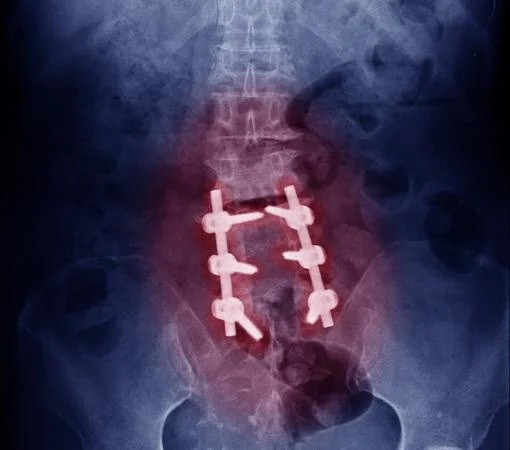
Persistent back pain, spinal instability, nerve compression, deformity, or certain degenerative conditions can significantly affect mobility and quality of life. While many spine conditions improve with medicines, physiotherapy, exercise, injections, and other non-surgical treatments, some patients may eventually require surgery to stabilize the spine and address the underlying problem.
Spinal Fusion Surgery in Mumbai is an established surgical option for selected patients with conditions such as degenerative disc disease, spondylolisthesis, spinal stenosis, fractures, and spinal instability. At Synapse Spine, a multidisciplinary team of orthopaedic spine surgeons and neurospine surgeons provides evaluation and personalized treatment planning for a wide range of spinal disorders.
What Is Spinal Fusion Surgery?
Spinal fusion is a surgical procedure designed to stabilize two or more vertebrae by encouraging them to fuse into a single solid segment. The procedure generally involves removing or preparing damaged disc material and placing a bone graft or an interbody implant between the vertebrae. Screws, rods, cages, or other instrumentation may be used to provide stability while fusion develops.
The objective is not simply to treat back pain but to address a specific structural problem in the spine. Whether fusion is appropriate depends on the diagnosis, severity of symptoms, imaging findings, spinal stability, and response to non-surgical treatment.
When Is Spinal Fusion Recommended?
Spinal fusion may be considered for carefully selected patients with conditions affecting spinal stability or alignment.
Synapse Spine lists several conditions for which lumbar fusion may be used, including:
- Degenerative disc disease
- Spondylolisthesis
- Spinal stenosis
- Certain spinal fractures
- Spinal instability
- Selected spinal deformities
The website notes that lumbar fusion is often considered when conservative treatment has not provided adequate relief or when instability or deformity is present.
However, having a spine condition does not automatically mean that fusion surgery is necessary. A detailed assessment is essential before deciding on surgery.
Understanding Lumbar Spinal Fusion
Lumbar spinal fusion focuses on the lower portion of the spine. Depending on the patient’s condition and the level requiring treatment, surgeons can use different surgical approaches.
Synapse Spine describes several lumbar fusion techniques, including PLIF, TLIF, OLIF, ALIF, and XLIF. Each approach has different methods of reaching the disc space and different indications and limitations.
Posterior Lumbar Interbody Fusion (PLIF)
PLIF approaches the spine from the back. The surgeon accesses the affected disc space, removes the damaged disc material, and places bone graft or an appropriate interbody implant to encourage fusion.
Additional screws and rods may be used to stabilize the treated spinal segment. Pre-operative imaging, including MRI and CT scans, can help with surgical planning and implant selection.
Transforaminal Lumbar Interbody Fusion (TLIF)
TLIF is another fusion technique that approaches the disc space from the back, through a transforaminal route. Synapse Spine describes TLIF as an approach designed to reduce muscle dissection and nerve manipulation compared with certain traditional techniques.
Depending on the patient’s condition, TLIF may incorporate minimally invasive or endoscopic techniques. A cage, bone graft, screws, and rods may be used to restore stability and facilitate fusion.
Oblique Lumbar Interbody Fusion (OLIF)
OLIF accesses the lumbar spine through an oblique approach from the side. It can reduce disruption of certain back muscles and may be associated with reduced postoperative discomfort and shorter hospital stays in appropriately selected patients.
However, OLIF cannot be used for every spinal level or every patient. The surgeon must determine whether the anatomy and condition are suitable for this approach.
Anterior Lumbar Interbody Fusion (ALIF)
ALIF approaches the lumbar spine from the front. Synapse Spine describes a mini-open ALIF approach that can be used to access the front of the spine through a smaller incision while preserving abdominal muscle integrity. It is commonly considered for fusion at the L5-S1 level.
Extreme Lateral Interbody Fusion (XLIF)
XLIF is a minimally invasive lateral approach in which the disc space is reached through the patient’s side. Imaging and specialized equipment are used to guide the procedure.
It may provide benefits such as reduced muscle disruption and shorter hospital stays for appropriately selected patients, but its use is limited by the spinal levels that can be accessed through the lateral approach.
Why Choosing an Experienced Spine Team Matters
Spinal fusion requires detailed understanding of spinal anatomy, nerve structures, alignment, biomechanics, and surgical technique. Synapse Spine brings together specialists from orthopaedic and neurosurgical backgrounds, allowing patients to receive care for both routine and complex spinal disorders.
The team includes orthopaedic spine surgeons, neurospine surgeons, a neurosurgeon, and a consultant spine surgeon and pain-management specialist. The doctors listed by Synapse Spine include Dr. Nandan Marathe, Dr. Anuj Bhide, Dr. Ajit Mishra, Dr. Aditya Raj, Dr. Abhishek Kulkarni, Dr. Medha Vyas, Dr. Kunal S. Singh, Dr. Sushant Nadkarni, and Dr. Falgun Yadav Dhawale.
Qualifications and Clinical Expertise at Synapse Spine
Synapse Spine’s doctors have training from leading medical institutions in India and abroad.
For example, Dr. Nandan Marathe completed MBBS and MS Orthopaedics from Seth GS Medical College and KEM Hospital, Mumbai, and received a gold medal with distinction. He subsequently completed fellowship training in complex spine surgery and deformity at the University of Toronto, along with specialized training in spinal tumours in Italy and minimally invasive and endoscopic spine surgery in South Korea.
Dr. Abhishek Kulkarni holds an MS in Orthopedics and has completed fellowship training in spine surgery and an international fellowship in minimally invasive spine surgery in Texas, USA. His training includes experience with procedures such as ALIF, MIS-TLIF, PLIF, LLIF, cervical and lumbar fixation, disc replacement, and SI fusion. His profile states that he has operated on more than 400 cases and assisted in more than 1,000 spinal procedures.
Dr. Ajit Mishra is a neurospine surgeon with MBBS, MS General Surgery, and MCh Neurosurgery from NIMHANS, where he was a gold medallist. He also completed a fellowship in neurosurgical oncology at Tata Memorial Hospital and has expertise in spinal tumours and endoscopic spinal surgery.
This combination of orthopaedic and neurosurgical expertise supports Synapse Spine’s approach to comprehensive spine care.
Patient-Centred Spine Care
Synapse Spine states that its approach combines modern technology, clinical expertise, and patient-centred care. The team focuses on accurate diagnosis and personalized treatment plans rather than applying the same treatment to every patient.
This is particularly important when discussing spinal fusion because surgery is a major decision. A consultation should establish whether the patient’s symptoms correspond with the imaging findings and whether non-surgical options have been adequately explored.
The Synapse Spine network also includes clinics across Mumbai and surrounding areas, including Chembur, Mumbai Central, Bandra, Vile Parle, Andheri, Goregaon, Malad, Borivali, Mira Road, Bhayandar, Vasai, and Virar.
For patients searching for a spine specialist Doctor in Mumbai, this broad network can make specialist spine evaluation more accessible.
What Happens Before Spinal Fusion?
Before surgery, the spine specialist reviews the patient’s symptoms, medical history, physical examination, previous treatments, and imaging.
MRI and CT scans can be important for evaluating discs, nerves, spinal alignment, bone structures, and the affected spinal levels. Synapse Spine specifically describes the role of MRI and CT imaging in pre-operative planning for PLIF.
The surgeon will then explain the recommended procedure, expected benefits, possible risks, alternatives, and recovery requirements.
Recovery After Spinal Fusion
Recovery after spinal fusion varies according to the patient’s age, general health, surgical technique, number of spinal levels treated, and the underlying condition.
Postoperative rehabilitation may include gradually increasing physical activity, following movement precautions, attending follow-up appointments, and participating in physiotherapy when recommended.
The goal is to allow the spine to heal while progressively restoring mobility and function. Patients should follow their surgeon’s instructions regarding lifting, driving, exercise, work, and other activities.
Is Spinal Fusion Right for You?
Spinal fusion is not appropriate for every person with back pain. In many cases, conservative treatment can provide significant improvement. Surgery is generally considered when there is a specific structural problem, significant instability or deformity, persistent symptoms despite appropriate non-surgical care, or another clear surgical indication.
If surgery is recommended, patients should understand exactly what condition is being treated and why fusion is preferred over other procedures.
A consultation with a qualified spine surgeon in mumbai can help you understand your diagnosis and treatment options before making a decision.
Schedule Your Consultation with Synapse Spine
If you have persistent back pain, spinal instability, spondylolisthesis, spinal stenosis, degenerative disc disease, or have been advised to undergo fusion surgery, a specialist evaluation can help you understand whether surgery is appropriate and which treatment approach may suit your condition.
Schedule Your Consultation Today
For patients considering Spinal Fusion Surgery in Mumbai, Synapse Spine provides access to a multidisciplinary team with expertise in conventional, minimally invasive, endoscopic, orthopaedic, and neurospine procedures
Frequently Asked Questions
1. What is spinal fusion surgery used for?
Spinal fusion is used to stabilize affected spinal segments and may be considered for conditions such as degenerative disc disease, spondylolisthesis, spinal stenosis, fractures, instability, and selected deformities.
2. What are the different types of lumbar fusion?
Common approaches include PLIF, TLIF, OLIF, ALIF, and XLIF. The appropriate technique depends on the spinal level involved, diagnosis, anatomy, and surgical objectives.
3. Does every patient with back pain need spinal fusion?
No. Many causes of back pain can be treated without surgery. Fusion is considered only when there is an appropriate structural or clinical indication and when the expected benefits outweigh the risks.
4. How can I consult a Synapse Spine specialist?
You can contact Synapse Spine at +91 81496 86139 or +91 74998 98303, or email synapsespine@gmail.com to schedule an appointment.


Comments
Post a Comment